Electronic Arts is no longer a publicly traded company.
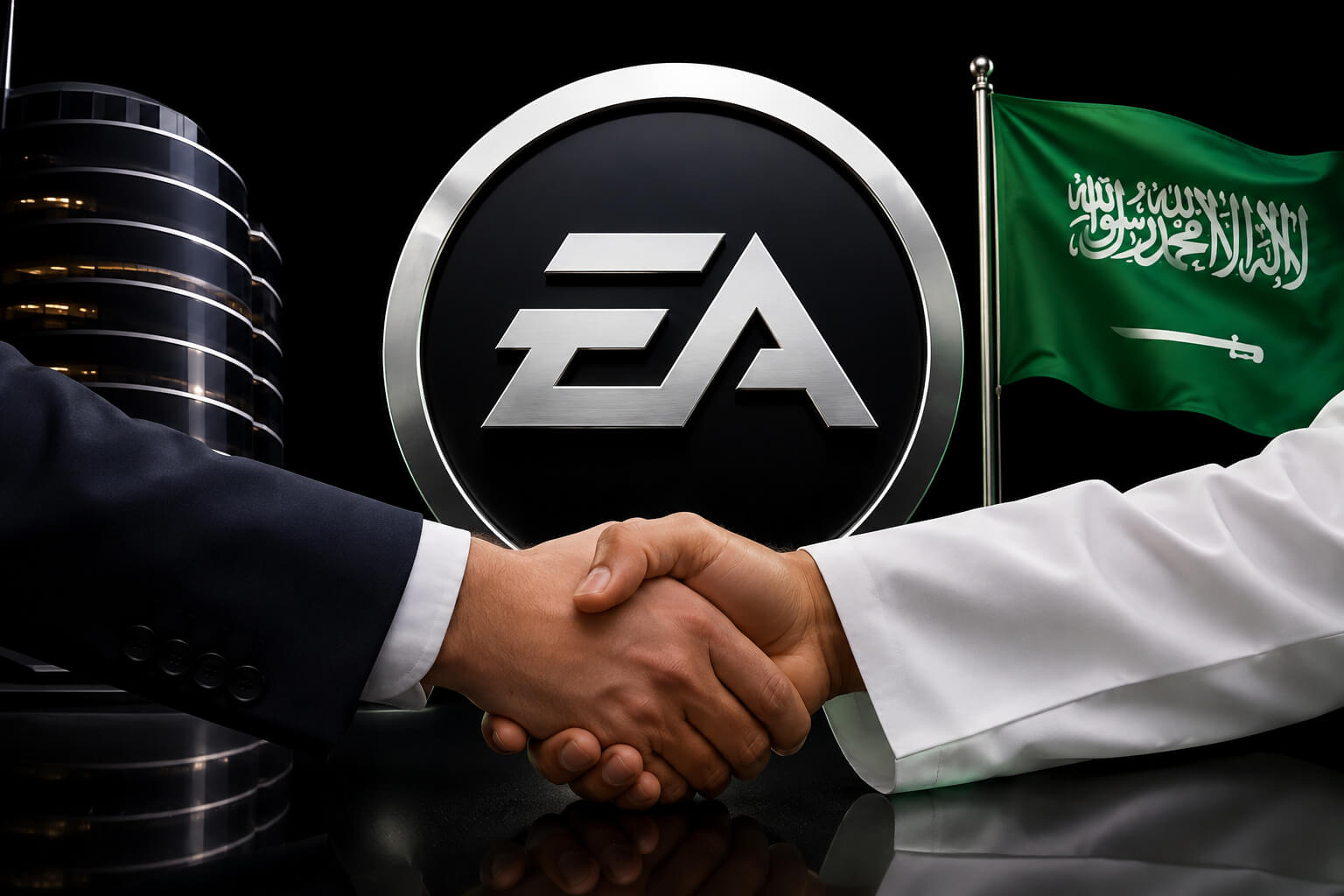
The publisher behind EA Sports FC, Apex Legends, Battlefield, The Sims and Madden NFL officially went private on August 4, 2026, after completing a $55 billion acquisition led by Saudi Arabia’s Public Investment Fund, alongside Silver Lake and Affinity Partners.
EA’s shares have stopped trading on Nasdaq, closing a public-market run that began in 1990. Stockholders receive $210 in cash for each share held when the deal closed.
It is a huge number. More importantly, it changes who EA answers to, how much of its business the public gets to see and where the pressure may land when the bills from the acquisition start arriving.
EA’s Public Company Era Is Over
The takeover agreement was first announced in September 2025. Shareholders approved it in December, regulators cleared the remaining hurdles in July 2026, and the transaction closed a few days later.
Andrew Wilson remains EA’s chairman and chief executive. The company will also keep its headquarters in Redwood City, California. On the surface, then, EA still looks like EA.
Behind the scenes, the structure is very different.
There will be no publicly traded EA stock drifting up and down after a Battlefield launch. Quarterly earnings calls will disappear. Detailed financial reports, franchise performance figures and other disclosures that came with being listed on Nasdaq may become far less frequent.
Private companies can reveal what they choose. That gives EA room to work without the usual three-month investor cycle. It also gives players, employees and industry watchers fewer windows into what is actually happening.
Shareholders Walk Away With $210 Per Share
The consortium paid EA shareholders $210 per share in cash. That price represented a 25 percent premium over EA’s unaffected closing price of $168.32 on September 25, 2025, shortly before the acquisition was announced.
The buyers acquired the entire company. PIF also rolled over the 9.9 percent stake it already held in EA rather than cashing out with other investors.
Reports indicate that PIF now controls around 93.4 percent of the private company. Silver Lake and Affinity Partners account for the remaining ownership.
So, while three investment groups appear on the paperwork, Saudi Arabia’s sovereign wealth fund clearly holds the dominant position.
The $20 Billion Debt Load Cannot Be Ignored
The headline figure is $55 billion. The number worth watching inside EA may be $20 billion.
Around $36 billion of the deal came from consortium equity, including PIF’s existing investment. The remaining amount was supported by debt financing arranged through JPMorgan Chase, with roughly $18 billion funded when the transaction closed.
That borrowing is why the acquisition has been described as the largest leveraged buyout ever completed.
Debt used in a leveraged buyout generally sits with the acquired business. EA now enters private ownership carrying a major financial obligation that must be serviced alongside development budgets, salaries, marketing costs and everything else required to operate one of the world’s biggest game publishers.
That does not automatically mean cuts are coming. It does make expensive mistakes harder to absorb.
A failed release already hurts. A failed release while carrying billions in acquisition debt hurts differently.
EA’s Biggest Franchises May Become Even More Important
EA owns an unusually strong collection of franchises. EA Sports FC, Madden NFL, College Football, Battlefield, Apex Legends and The Sims can attract enormous audiences while generating recurring revenue long after launch.
Those properties were valuable before the buyout. They look even more valuable now.
Large sports titles, live-service games and established brands provide predictable income. Smaller experiments do not. A publisher carrying heavy debt may naturally lean toward projects that financial models already understand.
That could mean more investment in EA’s biggest series, more live-service development and tighter scrutiny of projects without a proven audience. It could also leave less space for unusual ideas that need time before they become commercially meaningful.
Nothing forces EA to follow that path. The pressure is simply sitting there.
Silver Lake has already said the new ownership group plans to invest in EA’s growth, including the use of artificial intelligence in game development and player experiences. EA’s leadership has similarly presented the deal as an opportunity to accelerate investment rather than shrink the company.
Players will judge that promise through finished games, not investor statements.
What the Buyout Means for EA Esports
The acquisition also matters beyond traditional game publishing. EA operates inside some of the biggest competitive gaming ecosystems in the world.
EA Sports FC remains a major part of football esports. Apex Legends has an established global competitive circuit. Madden and other EA Sports properties continue to blur the line between professional sport, gaming and digital entertainment.
PIF has spent heavily across gaming and esports through investments, tournament properties and acquisitions. Its broader portfolio has included companies and brands connected to Scopely, SNK, ESL and EVO, among others.
EA now gives the fund direct control over another huge collection of games, communities and competitive platforms.
That could bring deeper tournament investment, larger international events or more aggressive expansion into emerging esports markets. It could also create a level of ownership concentration that deserves attention. The same investor can now hold influence across publishers, event operators and competitive gaming properties.
That is no longer a side story. It is part of how modern esports is being financed.
Questions Around Creative Freedom Have Not Disappeared
Not every reaction to the deal has focused on money.
Saudi Arabia’s human-rights record has drawn criticism from developers, players and advocacy groups. Questions have also been raised about what majority PIF ownership could eventually mean for games that include LGBTQ+ characters, political themes or stories that conflict with the kingdom’s laws and policies.
The Sims sits at the center of that concern. The series has long allowed players to build relationships, identities and families with relatively broad creative freedom.
There is no confirmed announcement that EA plans to change that approach. Still, the tension is obvious, and pretending it does not exist would be strange.
The real test will come through future content decisions, studio leadership changes and the projects EA approves or cancels. Corporate promises matter less once production schedules start moving.
EA Begins a Much Less Transparent Chapter
Going private can give a company patience. It can also hide problems for longer.
EA will no longer have to explain every quarter to public shareholders. That may help developers avoid short-term market pressure. At the same time, outsiders may receive less information about layoffs, studio spending, subscriber performance and the financial health of individual franchises.
The new owners say they want to invest boldly. EA says it is entering the next stage from a position of strength.
Maybe that is exactly what happens.
But a $55 billion acquisition backed by around $20 billion in debt is not a relaxed arrangement. It creates expectations, and those expectations will eventually reach development teams.
EA has gone private. The scrutiny will not disappear with the stock ticker.