
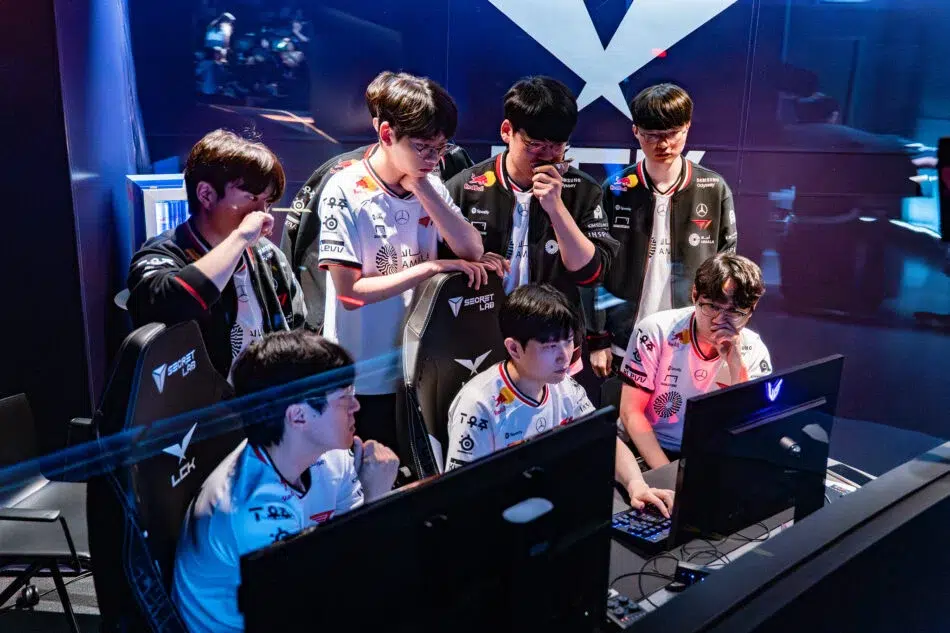
At the start of the season, the LCK and the LCP introduced ‘Coach Comms’, an experimental feature that adds another variable to the League of Legends esports scene.
For the first time ever, LCP and LCK team coaches can communicate directly with players in the game, similar to how engineers talk to their drivers in Formula 1.
While it’s definitely a notable experiment, reactions from League of Legends coaches and players have been mixed. Ultimately, it has boiled down to one open discussion: are Coach Comms a genuine competitive tool? Or just another gimmick that will tune out over time?
What Is Coach Comms, and Why Does It Matter?
Coach Comms is a new system introduced at the start of the 2026 season. It essentially allows members of any team’s coaching staff to interact directly with the players in-game and acts as an extra tool of communication.
Over the past 15 years, League of Legends coaches only affected the team’s performance pre-game, through preparation, drafting, and strategy discussions. Once the players entered Summoner’s Rift, coaches lost all their influence until the end of the game.
The new system aims to change that, giving an additional way to help teams perform on a higher level. This year’s Coach Comms allows coaching staff members to communicate with the team up to three times in a single game, with each intervention lasting up to 45 seconds.
That being said, the initial sentiment regarding Coach Comms didn’t have much enthusiasm, as several coaches stated it would be a ‘new variable to manage’.
Gen.G head coach Ryu ‘Ryu’ Sang-wook, for instance, downplayed the impact at the start of the LCK Media Day: “I don’t think it will have a big impact, and it’ll probably play out similarly (to before),” he previously stated.
Having said that, not having a big impact doesn’t mean it’s irrelevant. Now that the LCK Cup Group stage is over, let’s see what the pros and cons of Coach Comms are and which teams can benefit the most from it.
The Pros of Coach Comms
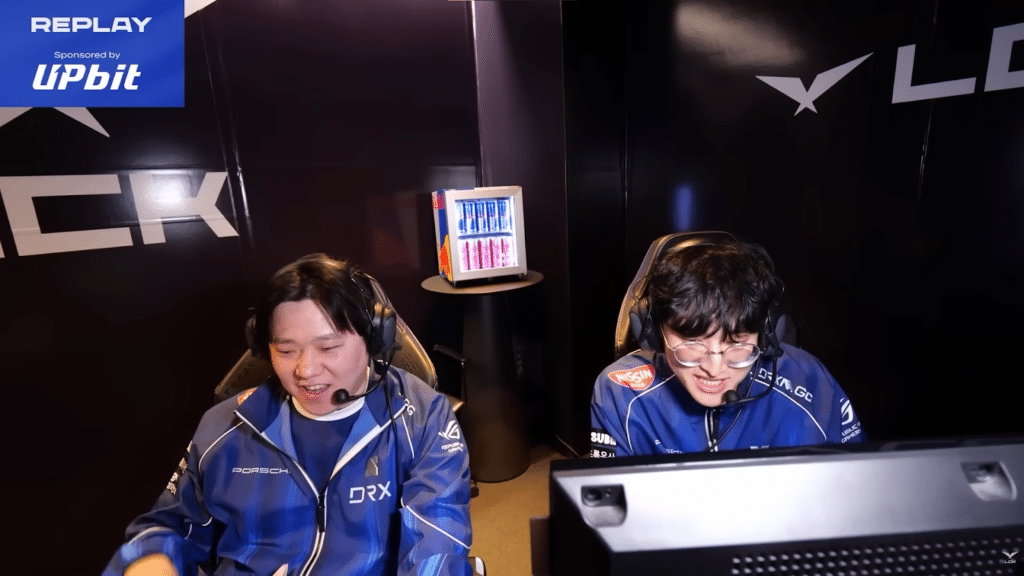
One of the most compelling arguments in favour of Coach Comms is that the coach can give extra inputs when teams seem to struggle to play the map according to the game state.
BNK FearX head coach Park ‘Edo’ Jun-seok suggested it could help when players are “in a rush” and need more coordination. It can be helpful to reduce chaos in moments where players seem lost and need to quickly reassess.
This feedback was further reinforced by KT Rolster’s mid laner Gwak ‘Bdd’ Bo-seong, who admitted that the system turned out to be more helpful than expected. He expressed that the continued guidance in the matches can be ‘very useful’, making sure that the players are playing according to the plan or extra reminders on how to play out the map better.
The other big benefit of using Coach Comms is the opportunity to help players maintain a good mental focus during the game. There are several historical instances where players struggled with tilt and the stress that comes with playing highly competitive matches.
With this system, a coach can intervene and look to prevent excessive tilt, which can potentially help reduce mistakes that negatively impact the game. This aspect was supported by DN SOOPers’ head coach Ju ‘oDin’ Yeong-dal, who suggested it could help with ‘mental care’.
While the aforementioned aspects help the players in-game, Coach Comms also has indirect benefits for the viewers.
The LCK has been using the new system to give fans a new team perspective by broadcasting segments of the communication between players and coaches. Alongside providing viewers with more content, it aims to also give clearer insights into the impact a coach can have on a team. This area, in particular, has often been questioned by the community in the League of Legends scene.
The Cons of Coach Comms

While the upsides seem to be clear, there are some downsides to Coach Comms. T1 jungler Mun ‘Oner’ Hyeon-jun previously stated in an interview that his team doesn’t really use Coach Comms and even warned that the use can cause him to lose focus. This means Coach Comms can be detrimental when used during specific moments of a match where players need to remain sharp.
Hanwha Life Esports head coach Yoon ‘Homme’ Sung-youn was also worried about this aspect. Even though the coach’s input can be correct, the potential distraction caused by an additional voice can be greater.
League of Legends GOAT Lee ‘Faker Sang-hyeok acknowledged all the points explained above. “I think coach voice comms can be useful for pointing out things the team is missing mid-game. On the other hand, it can also break the flow and make it harder to maintain focus,” he explained in a post-match interview.
Is Coach Comms a Good System in League of Legends?
Overall, Coach Comms is not a must-have for all teams, but it seems to be beneficial for specific squads who might need extra guidance.
In other words, it comes down to the individual teams to understand whether it can help improve overall on-stage performances. Generally speaking, the teams that may benefit from it the most are organisations with new rosters, those that struggle with finding synergy, or teams that lack an in-game shotcaller.
Coaches can’t change a player’s in-game mechanics, but their intervention can help those who require additional guidance and alignment between players, especially on macro plays.
Another segment of teams that can best use the new system is those who are more prone to underperform under stress or tilt. Coaches can help maintain composure and discipline through encouraging words. While it may be a subtle aspect, it can be a game-changer in high-stakes matches.
However, whilst the intention of a coach may be to help in this instance, it is not guaranteed that this will benefit the player. In fact, it’ll largely be case-by-case basis, with some players potentially becoming more stressed if another voice is suddenly added to in-game communication.
Ultimately, though, for teams like T1, which already have long-standing synergy and a well-established framework, the benefits of Coach Comms are much more limited.
Source: https://esportsinsider.com/2026/02/coach-comms-league-of-legends-esports-pros-cons