
Up until last weekend, a lot of general esports fans were likely unaware of Honor of Kings and its competitive ecosystem.
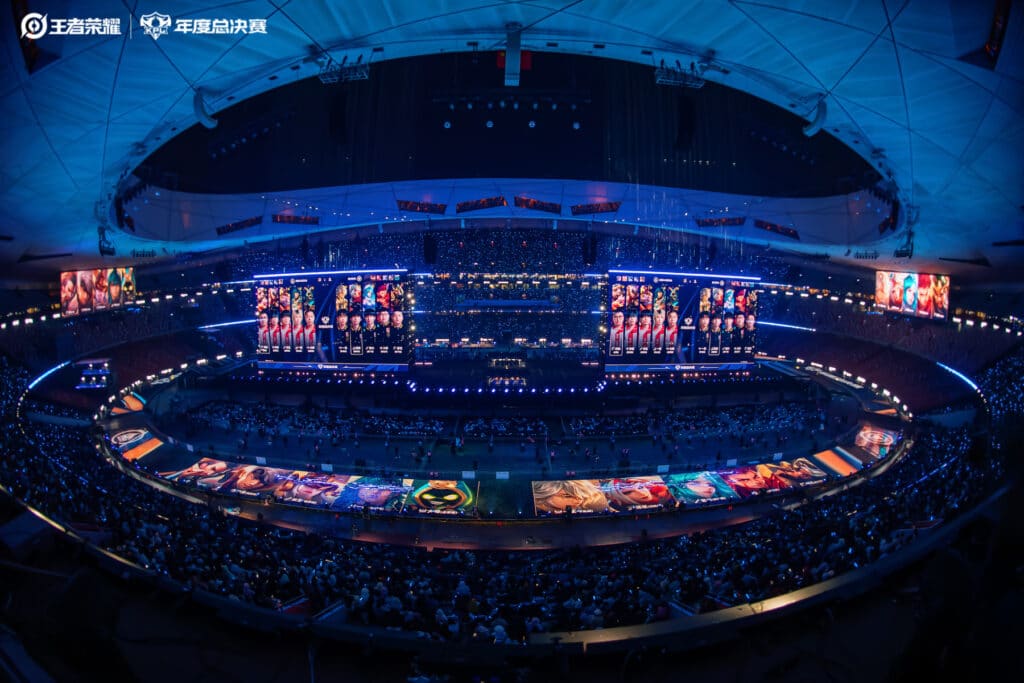
However, during the 2025 King Pro League Grand Finals at China’s iconic Bird’s Nest stadium, the tournament broke the Guinness World Record for the highest attended single esports event ever. With an attendance of over 62,000, the accolade was officially recognised during the competition’s half-time show, which in itself is a rare concept for most titles.
With the Chinese esports scene often shrouded in mystery, Western audiences are typically told about its popularity via word of mouth. However, in this instance, there was a numerical value to put alongside this claim. Not only did this figure highlight the popularity of Honor of Kings in the country across social media, but it also put a spotlight on the mobile esports scene.
Keep Reading
- Honor of Kings International Championship 2025 preview: format, teams, and more
- Honor of Kings breaks esports attendance Guinness World Record
- Honor of Kings announces 2026 esports roadmap
To learn more about the Honor of Kings esports ecosystem, its sheer popularity in China and its global expansion, Esports Insider was invited by Tencent to the KPL Grand Finals 2025.
In part one of this two-part deep dive, ESI explores Honor of Kings’ growth in China, including its unprecedented esports structure and cultural impact.
The Birth of an Esport Giant
Developed by Tencent Games subsidiary TiMi Studio, Honor of Kings was first released in mainland China in November 2015. The mobile MOBA follows the tried and tested formula of having two teams compete to destroy each other’s base, with various buffs and objectives to claim throughout the duration of the match.
Honor of Kings had a very clear ambition to enter esports from the get-go, with the game’s first major championship — the Kings Champion Cup — taking place in 2016. Following the competition, which was won by eStar Pro, Honor of Kings launched the King Pro League.
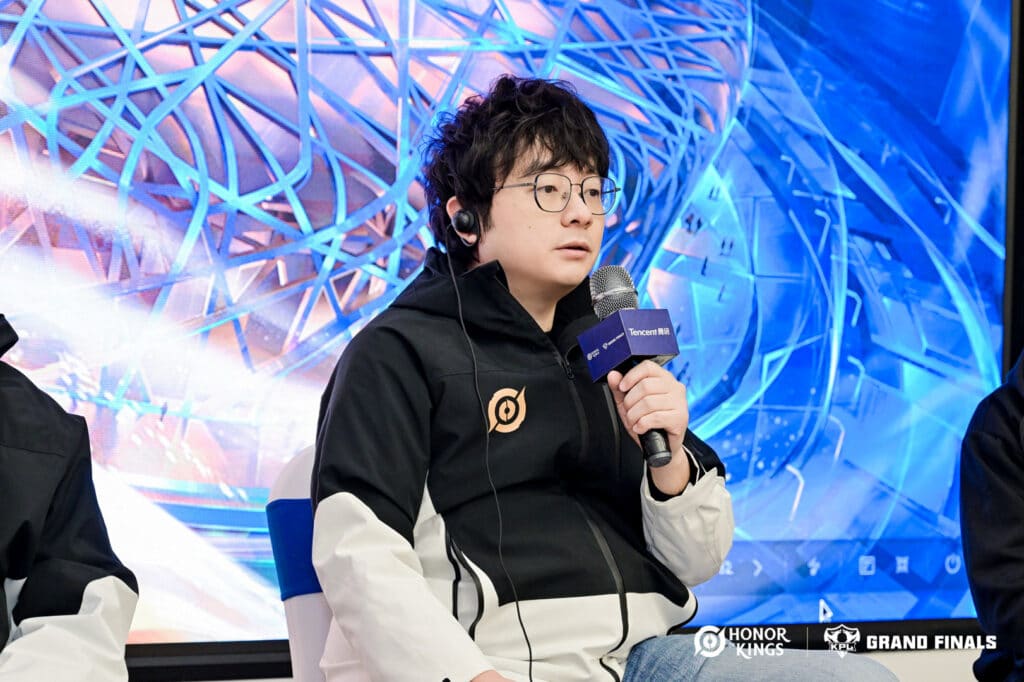
Initially starting with 12 teams, the league would go on to become one of the biggest competitions in China. However, when speaking to the media prior to the 2025 KPL Grand Finals, Cheng Huang, Head of the King Pro League, highlighted how the league’s success didn’t come without doubts or difficulties.
In the translated interview, he said: “When the KPL was first founded, we were worried whether there would be enough clubs or teams that recognised our league.
“So for them to join us, we needed to improve our format, our mechanism. For our audience, the format and the scene needed to be exciting and more engaging. So these are the challenges we faced in the initial stage.”
In 2018, the league adopted a fixed franchise format featuring 14 teams, including notable Chinese names such as EDward Gaming, Top Esports, and Royal Never Give Up.
Moreover, the KPL introduced a pick-and-ban system that has recently gained popularity across other esports. The system prevents any hero that the specific team has selected from being played for the rest of the series. However, in a best-of-seven series, if it goes to the last game, the ‘Ultimate Battle’ will commence. All picks are then hidden from the opposition, and players can choose freely with no restrictions.
Typically, Honor of Kings esports utilises BO5 and BO7 series throughout its ecosystem. Whilst this may seem like a lot of games to many esports enthusiasts, the mobile MOBA’s matches are high-action and quick-paced, typically lasting between 13-20 minutes.
Via a presentation shared with Esports Insider, Honor of Kings highlighted that 2017 was ‘the beginning of a true ecosystem for KPL’. In the following years, the King Pro League continued to develop and expand its framework before landing on a consistent structure in 2021.
In the present day, the KPL consists of 18 teams — 16 franchised organisations and two temporary slots. These two temporary slots are used to support the KPL Growth League (KGL), its tier-two ecosystem. Each split, the KGL winner gains instant promotion while the temporary KPL teams compete against other KGL teams for the final slot.
From its inception, the King Pro League ecosystem has grown from a 1.85m RMB (~£197,210) prize pool in 2016 to 103.5m RMB (~£11m) in 2025. Moreover, the KPL claims that the league has climbed from 180m unique viewers in 2018 to 250m viewers in the 2025 season (prior to last weekend’s Grand Finals).
Tencent clarified to Esports Insider that these figures are calculated from various platforms, including social media, local streaming channels and Honor of King’s in-game TV stream.
Esports and Fandom at Its Highest Level

After nine years of development, the Honor of Kings esports ecosystem in China is deep and comprehensive.
The KPL features a Salary Cap system that sets a minimum and maximum wage. Moreover, Honor of Kings in China offers a support system to help players transition into other roles, such as broadcasting and coaching, once they retire.
However, the part of the ecosystem that surprised this writer was Honor of Kings’ emphasis on creating fandoms through regionalisation and raising its players’ profiles to celebrity status.
In 2020, the Kings Pro League began implementing its home city format in a bid to connect the clubs closely with different parts of China. This means that the likes of All Gamers (AG Super Play), JD Gaming and Wolves Esports represent Chengdu, Beijing and Chongqing, respectively.
In some cases, teams have also created esports facilities in the cities that are used during the KPL season to host ‘home venue’ matches.
Whilst the regionalised franchised model has been utilised in other esports in the past, it has rarely been viewed as a success in the Western world. Yet, in China, there is a clear sense of regional pride, evident both in the teams’ marketing and fans’ perspectives.
One showcase of this was the Honor of Kings Carnival in Beijing, a multi-city festival that celebrated the game’s tenth anniversary. Taking place at Weibo Gaming’s esports venue, the carnival had a significant emphasis on Honor of Kings esports, including having an area in which fans could write down supportive messages for KPL teams.
Looking at each team’s boards, the ones with the most messages were the two Beijing representatives — JD Gaming and Weibo Gaming — as well as AG Super Play, undoubtedly the KPL’s best team.
It was also during this writer’s visit to the Weibo Gaming venue that the true sense of how popular Honor of Kings’ esports players are hit home.
Visiting the day after the KPL Grand Finals, hundreds of fans (possibly thousands throughout the day) were present at the carnival. One activity in particular saw them come up on a stage to shout out players that they wanted to show support for. This was then followed by two KPL athletes from LGD Gaming NBW and KuaiShow Gaming appearing to interact with fans.

When discussing the benefits of the regionalised franchise model, Zhong Zhuang, King Pro League’s Operations Manager, highlighted how most of the clubs were originally based in Shanghai. As such, these teams “didn’t have a strong sense of belonging,” he mentioned.
Zhuang explained: “With a home venue and home city, there will be a steady local audience, and then that will give rise to consumption as well as tourism locally.
“Second, it gives a stronger sense of belonging and city pride for fans and also citizens. Also, this leads to higher loyalty of the fans in a certain city. Third, it expands the commercial value because it can better connect the local governments with the clubs and teams, so the local government can have more financial support for the teams.”
These home venues in particular cannot go understated. Hosted by esports organisations, some of these venues have become notable landmarks in their own right. Esports Insider had the opportunity to visit JD Gaming and Weibo Gaming’s venues, featuring areas that can host up to 2000 and 1500 spectators, respectively, for esports matches.
When visiting, both venues also felt distinctly different. The JD Gaming home arena had a focus on esports performance, equipped with a training and testing centre for young, potential esports athletes, as well as a gym, kitchen, streaming, and strategy rooms. Meanwhile, Weibo Gaming’s venue was more akin to a mall, featuring food restaurants and stores.

JD Gaming and Weibo’s venues are one of six home city arenas that are utilised throughout the KPL season. The others are located in Chengdu (All Gamers), Chongqing (Wolves), Hangzhou (LGD) and Nantong (Hero JiuJing), as well as KPL’s own venue in Shanghai.
The Bird’s Nest: Honor of Kings’ Crowning Esports Moment
When learning more and more about Honor of Kings in China, it’s somewhat less of a surprise to see the game pull off an event at the Bird’s Nest, a venue that can hold up to 91,000 people with temporary seating.
Tickets for the KPL Grand Finals between Wolves Esports and AG Super Play sold out within 12 seconds, with 85% of those purchased by fans outside of Beijing. The setup featured a 7,000-square-meter dual-sided screen situated in the centre, allowing both sides of the stadium to watch the action.
The unique layout provided a home vs. away feel, with fans splitting the arena 50/50. It can be argued that more seats could have been sold; however, selling tickets for the sides would have resulted in poor viability due to the screens..
“This is our first time hosting this event in the Bird’s Nest National Stadium. I think for the KPL, this is a milestone event in our history,” said the Head of the King Pro League.
In total, 62,196 people flooded into the stadium, which featured various Honor of Kings and KPL-themed activations. Some notable ones included fans taking pictures alongside their favourite heroes, some of whom held up their accounts and statistics on their phones.
If the popularity of esports athletes wasn’t already highlighted in this piece, fans who bought tickets were also given gifts (which varied depending on what ticket they bought). This included merchandise such as photocards, stickers and bookmarks, with fans clamouring to pull their favourite player, similarly to K-pop fandoms.

Interestingly, Honor of Kings told Esports Insider that its offline KPL audience is typically a gender ratio of 7:3 Female/Male, with a 4:6 Female/Male ratio for online viewers. From scanning the crowd at the event, it’s hard to disprove this figure.
The opening ceremony featured a cinematic video showcasing the upcoming match, with AG Super Play on a historic run, having claimed five KPL event titles in a row. Meanwhile, the underdogs, Wolves Esports, clawed its way through the lower bracket to make it to the finals.
The anthem of the event — 神驰的属地 (Shenchi’s territory) — was performed by Han Hong and was akin to watching a performance at the Super Bowl. Alongside the announcement of the Guinness World Record, the half-time show after game three also included a musical performance by Zhou Shen.
Not to be forgotten, the match itself also showcased the passionate fanbase. The beginning of every match featured mic’d-up call-and-response exchanges from supporters of both AG Super Play and Wolves Esports.
In the end, Wolves Esports was unable to topple AG Super Play, falling to a 4-2 defeat that featured incredibly tense action, with Wolves being just a few attacks away from claiming game one. AG Super Play, a team that has dominated the KPL over the last two years, secured perhaps Honor of Kings’ biggest trophy yet.
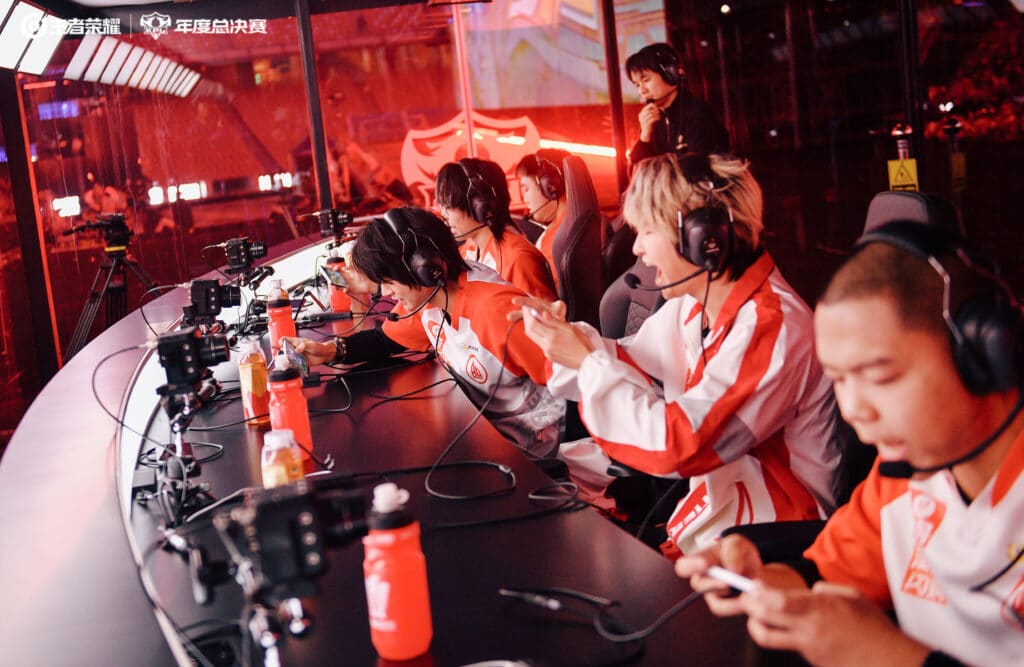
The historic nature of the event was also not lost on the players competing. Speaking to select media, the AG Super Play team discussed its recent win.
Midlaner Xie ‘ChangSheng’ Chengjun, commented: “I think for people, we all have dreams, so for me to compete here on such a big stage. For me, it was a dream come true. Especially seeing so many fans coming to cheer us on. It’s a great memory for me. I will always remember this moment in my life.”
Meanwhile, Roamer Meng ‘DaShuai’ Jiajun, added: “I couldn’t imagine that I could stand here. We can compete here at Bird’s Nest. Especially for Chinese people, it’s like a very iconic venue. So to compete here and win here, it’s a very happy day for me, and I will always remember this moment.”
Honor of Kings’ latest achievement once again highlights the popularity of esports and gaming in China. So much so, that this article didn’t even touch on the fact that Honor of Kings has a Chinese drama series based on the game and various KPL player-centric commercial opportunities such as variety shows appearances and image licensing.
What happens next for Honor of Kings esports remains to be seen, but the game’s popularity seems to be showing no signs of slowing down. As a pure spectacle, the event has also caught the attention of those outside of China, which comes at a good time as Honor of Kings’ global expansion continues to ramp up.
In part two later this week, Esports Insider explores Honor of Kings’ global ambitions and how it aims to produce a non-Chinese world champion sooner rather than later.
Source: https://esportsinsider.com/